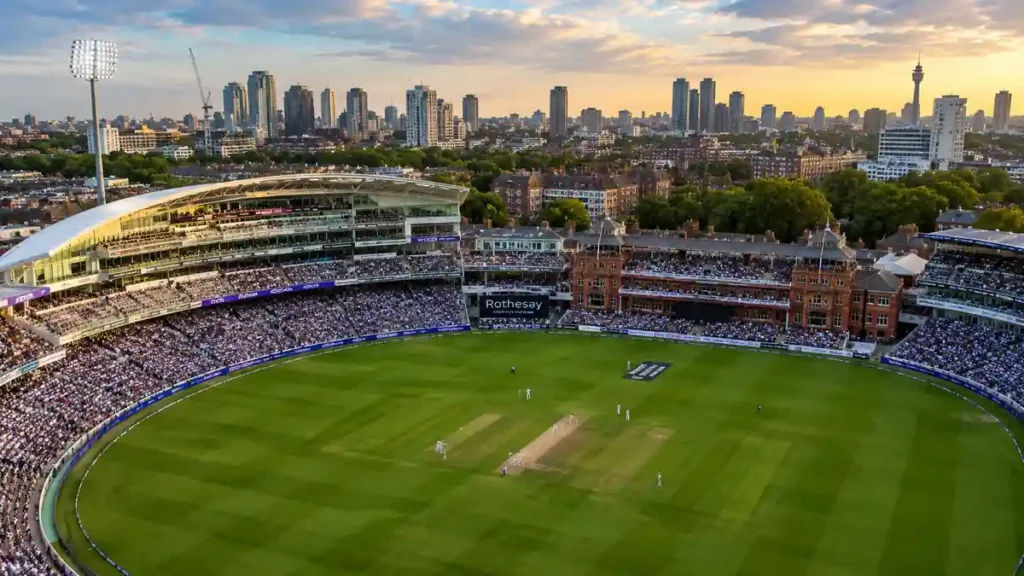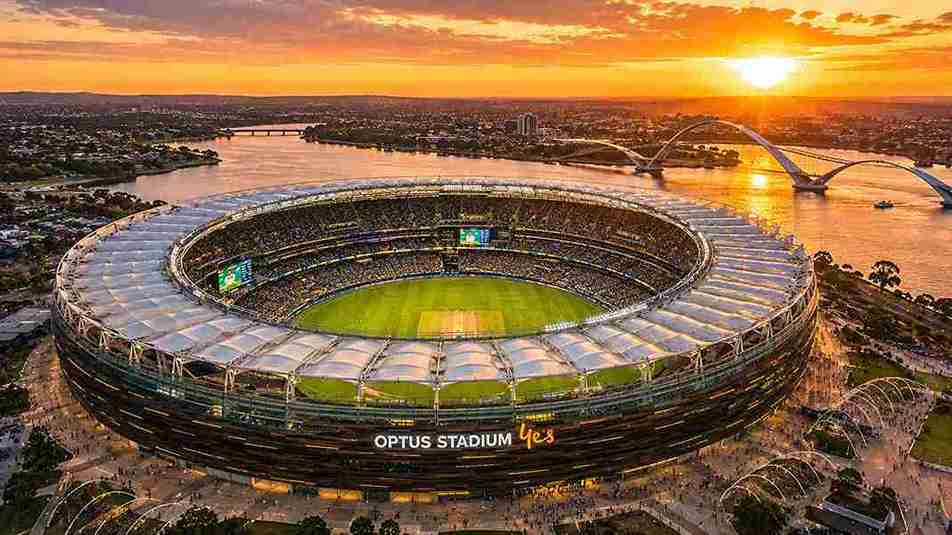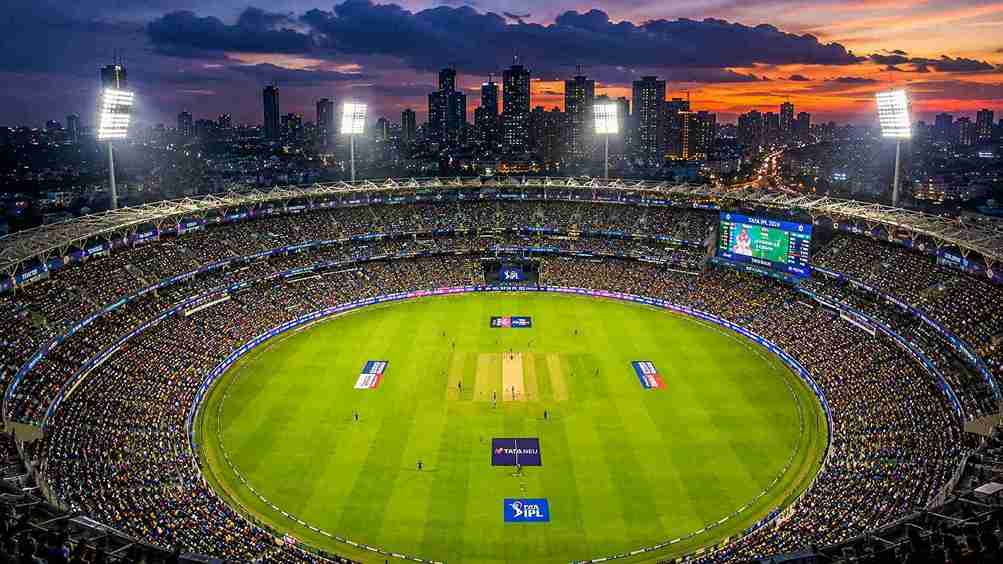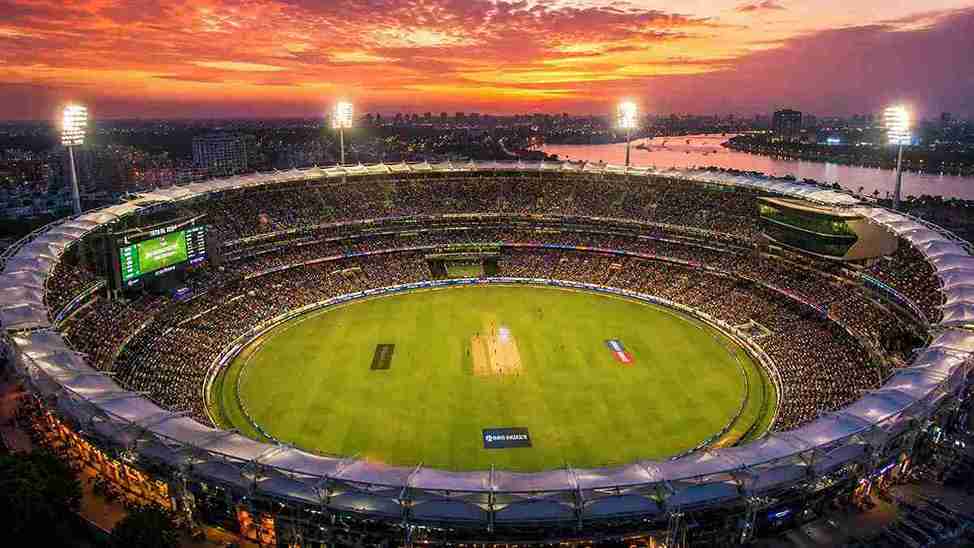
Few venues in world sport carry the sheer physical scale of the Narendra Modi Stadium in Motera, Ahmedabad. With an official seating capacity of 132,000, it isn’t just the largest cricket stadium on the planet — it’s the largest stadium of any kind, anywhere in the world, eclipsing even the storied Melbourne Cricket Ground.
From Sardar Patel Stadium to a Modern Colosseum
The story of this ground actually begins decades before its current avatar. Back in 1982, the Gujarat government donated land on the banks of the Sabarmati River, and within just nine months a stadium was built — originally known as the Sardar Vallabhbhai Patel Stadium. It hosted its first Test match in November 1983, when India took on a star-studded West Indies side, with Kapil Dev picking up nine wickets in what remains one of the great individual bowling displays in Indian Test history.
That original stadium went on to host World Cup matches in 1987, 1996, and 2011, and witnessed several landmark Indian cricketing moments — Sunil Gavaskar reaching 10,000 Test runs against Pakistan in 1986–87, and Kapil Dev later overtaking Richard Hadlee as Test cricket’s leading wicket-taker at the same ground.
By 2015, though, the old stadium had been demolished to make way for something far grander. Construction of the new arena began, and the rebuilt stadium was officially completed in February 2020. On 24 February 2021, the Gujarat Cricket Association renamed it after Prime Minister Narendra Modi, who had served as GCA president from 2009 to 2014 and was closely involved in driving the redevelopment. It was the first piece of public infrastructure in India to be named after a sitting prime minister, a decision that drew both praise and criticism at the time.
The Numbers Behind the Giant
The rebuilt stadium is owned and operated by the Gujarat Cricket Association and covers a vast footprint near the Sabarmati River. Its 132,000-seat capacity surpassed the Melbourne Cricket Ground’s approximately 100,024, making it the new benchmark for stadium size worldwide. The reconstruction was carried out by Larsen & Toubro, with design work from the architecture firm Populous, and cost in the region of ₹800 crore (roughly $100 million).
A Stage for Cricket’s Biggest Occasions
Since its reopening, the Narendra Modi Stadium has quickly established itself as one of the sport’s marquee venues. It hosted the final of the 2023 ODI Cricket World Cup, where Australia defeated India in front of a packed home crowd — a result that remains a painful memory for Indian fans given the team’s unbeaten run through the tournament until that point. The stadium was also chosen to host the final of the 2026 Men’s T20 World Cup, cementing its status as cricket’s most prestigious modern arena.
Beyond ICC events, the ground is the home venue of the Gujarat Titans in the Indian Premier League and regularly hosts Test, ODI, and T20I fixtures involving the Indian national team. It also has a place in political history: in February 2020, it hosted “Namaste Trump,” a high-profile rally attended by then-US President Donald Trump alongside Prime Minister Modi, which drew well over 100,000 people.
Pitch Character and On-Field Identity
Cricket followers and commentators generally describe the surface at the Narendra Modi Stadium as a balanced one — a pitch capable of rewarding both batters and bowlers depending on conditions and the stage of the match, rather than being a pronounced “flat” or “green” track. That balance has made it a venue where results tend to come, rather than one that produces attritional draws.
A Symbol as Much as a Stadium
What makes the Narendra Modi Stadium remarkable isn’t only its capacity figures — it’s the speed and scale of its transformation from a modest 49,000-seat regional venue into the largest cricket arena in the world within the space of a few years. For a sport that has always measured its great venues by the roar of the crowd, Motera now offers the loudest stage cricket has ever built: a ground capable of hosting more spectators for a single match than the population of many small cities.
Whether it’s an India-Pakistan World Cup clash or an IPL final for the Gujarat Titans, a full house at the Narendra Modi Stadium remains one of the most visually and acoustically overwhelming sights in world cricket — a fitting emblem of how far the infrastructure of the sport has come in India over the last two decades.