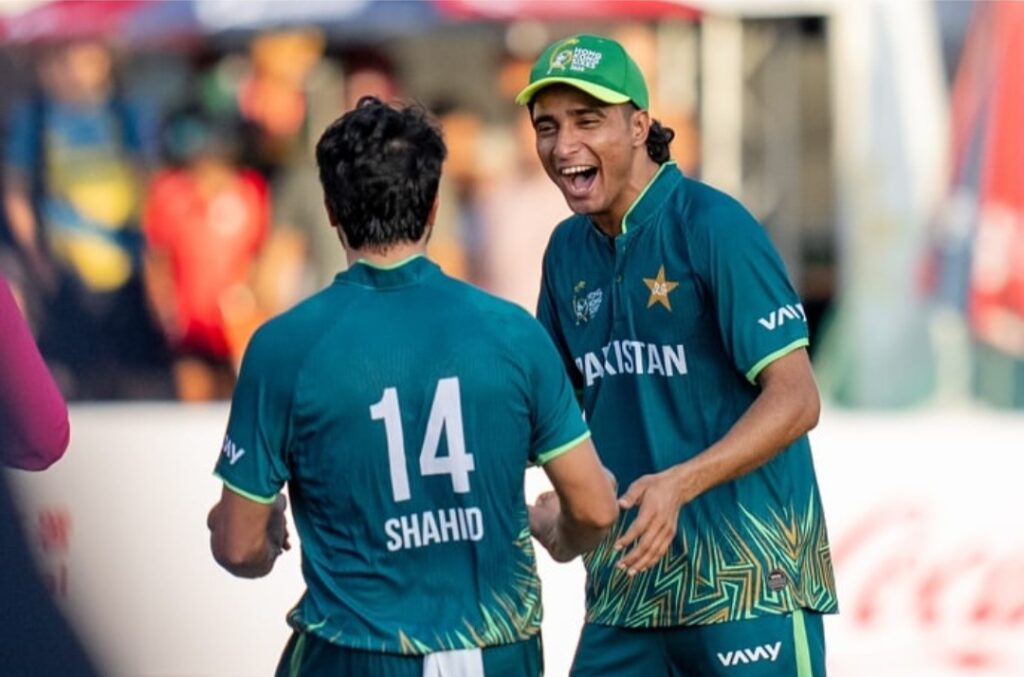
Pakistan cricket fans had plenty to celebrate on November 9, 2025, as their team lifted the Hong Kong Super Sixes trophy after a commanding 44-run victory over Kuwait in the final at Mission Road Ground in Mong Kok. It was a perfect end to three days of thrilling six-a-side cricket action, and more importantly, it ended Pakistan’s three-year wait for the title.
The Green Shirts came into this tournament with something to prove. After reaching the finals in recent editions but falling short, this year’s squad, led by captain Abbas Afridi, was determined to reclaim what they consider their throne in this fast-paced format of cricket.
The Final Showdown Hong Kong Super Sixes 2025
When Pakistan won the toss and chose to bat first in the final, few could have predicted the absolute carnage that was about to unfold at Mission Road Ground. What followed was six overs of some of the most brutal hitting seen in the tournament’s 21-year history.
Pakistan’s Explosive Start
Abdul Samad and Khawaja Nafay opened the batting for Pakistan, and they wasted absolutely no time getting down to business. Yasin Patel was given the new ball for Kuwait, and what happened next must have felt like a nightmare for the debutant nation.
Samad launched the second ball of the match for a massive six, setting the tone immediately. But that was just the appetizer. Nafay joined the party by smashing his very first delivery for six as well. The carnage continued as Pakistan plundered an incredible 26 runs from that opening over alone. Kuwait’s bowlers and fielders looked shell-shocked as the ball kept disappearing into the stands.
Nafay was in no mood to slow down. He raced to 22 runs off just six balls, a knock that included two boundaries and two towering sixes. His innings might have been brief, but it did exactly what was needed – it put Pakistan firmly in the driver’s seat right from the start. When Nafay departed, Pakistan had already laid a strong foundation for what would become a massive total.
Abdul Samad Takes Charge
After Nafay’s dismissal, Abdul Samad shifted gears even further. The young all-rounder has been in sensational form throughout this tournament, and the final was no different. He absolutely tore into the Kuwait bowling attack with a fearsome display of power-hitting.
Samad’s knock of 42 came off just 13 deliveries, and every single one of his scoring shots seemed to race to the boundary or sail over it. He struck five massive sixes and added two fours for good measure. The way he was timing the ball, it seemed like every shot was coming off the sweet spot of his bat. Kuwait’s bowlers tried everything – slower balls, yorkers, wide deliveries – but nothing could stop Samad’s onslaught.
By the time Samad was dismissed, Pakistan’s score had rocketed to 95 for 3, and they had consumed just over four overs. The platform was set, but what came next took things to an entirely different level.
Abbas Afridi’s Incredible Assault
Pakistan’s captain Abbas Afridi walked in with his team already in a commanding position. But Afridi, who had been relatively quiet with the bat in earlier matches, decided that the final was the perfect stage to play the innings of his life.
What Afridi did in those final overs was nothing short of extraordinary. The captain went absolutely berserk, smashing the Kuwait bowlers to all parts of the ground. He raced to his half-century off just 11 balls, one of the fastest fifties you’ll ever see in any format of cricket.
The numbers tell only part of the story – 52 runs off 11 balls, including seven sixes and two fours. But watching it unfold was something else entirely. Afridi was picking his spots perfectly, reading the bowlers’ minds, and executing his shots with clinical precision. Whether it was straight down the ground, over mid-wicket, or over the covers, every shot seemed to find the perfect gap or clear the boundary with ease.
Maaz Sadaqat provided valuable support at the other end, chipping in with some timely boundaries to keep the scoreboard ticking even when Afridi wasn’t on strike. The partnership ensured that Pakistan’s momentum never dropped, even for a single delivery.
When the sixth over concluded, Pakistan had posted a mammoth 136 runs on the board. In the six-over format, chasing anything above 100 is always tough, but 136 looked like a mountain too steep to climb, especially for a team playing in their first-ever Hong Kong Sixes final.
Kuwait’s Brave Response
Kuwait’s chase got off to the most explosive start imaginable. If Pakistan thought they could just coast to victory, Adnan Idrees had other plans. The Kuwait opener came out swinging and absolutely destroyed Shahid Aziz’s first over.I
drees smashed five sixes in that opening over, taking 32 runs off it and suddenly giving Kuwait a glimmer of hope. For a brief moment, it looked like we might witness one of the greatest chases in Hong Kong Sixes history. The crowd was on its feet, and Pakistan’s fielders looked rattled for the first time in the match.
But that’s where Pakistan’s experience and composure came into play. Mohammad Shahzad was brought into the attack for the second over, and he delivered exactly what his captain needed. Shahzad struck immediately, removing the dangerous Idrees for 30 off just eight balls. That wicket changed everything.
Pakistan’s Bowling Masterclass
With Idrees gone, Kuwait’s chase lost its momentum. Meet Bhavsar, who had been outstanding in the semi-final with a blazing 62, tried his best to keep the chase alive, but Pakistan’s bowlers had other ideas.
Maaz Sadaqat, who had contributed so well with the bat, now proved his worth with the ball. He delivered a match-turning spell, claiming three crucial wickets and completely dismantling Kuwait’s middle order. Every time Kuwait tried to rebuild, Sadaqat would strike, keeping Pakistan firmly in control.
The Kuwait batters kept trying to hit boundaries, and occasionally they succeeded, but the asking rate was just too steep. Pakistan’s fielders were sharp, their bowlers were on target, and more importantly, they didn’t panic even after that explosive first over.
Abdul Samad, who had already done the damage with the bat, was given the ball for the sixth over to finish things off. And finish he did. Samad wrapped up the Kuwait innings, bowling them out for just 92 runs. The 44-run victory margin told the story – Pakistan had been too strong, too experienced, and too determined to let this opportunity slip away.
Journey to the Final
While the final was the main event, Pakistan’s road to that point had its own share of drama and excitement. The tournament started on a slightly disappointing note for Pakistan when they lost to India via the DLS method on the opening day. That defeat could have derailed their campaign, but instead, it seemed to light a fire under the team.
From that moment on, Pakistan played like a team possessed. They didn’t lose another match in the entire tournament. In the quarter-finals, they comfortably defeated South Africa by five wickets, showing their ability to chase under pressure.
The semi-final against Australia was where Pakistan really had to dig deep. Batting first, they posted 121 for 2, with Khawaja Nafay’s explosive 50 off just 14 balls and Abdul Samad’s quickfire 34 off 13 providing the bulk of the runs. Australia’s chase came incredibly close, with Alex Ross and Chris Green nearly pulling off a miraculous victory. With seven runs needed off the last two balls, Green was run out attempting a desperate second run, and Pakistan scraped through by just one run. That narrow escape might have been exactly what they needed heading into the final.
What This Victory Means
This title was Pakistan’s sixth Hong Kong Sixes crown, adding to their previous victories in 1992, 2001, 2002, and 2011. It places them among the most successful teams in the tournament’s history, right up there with the likes of England and South Africa.
But more than the numbers, this victory was about redemption. Pakistan had been knocking on the door in recent editions, reaching the final but failing to finish the job. The pain of those near-misses was evident in how they celebrated this victory. For captain Abbas Afridi especially, leading his team to glory with that magnificent innings in the final will be a moment he’ll cherish forever.
The tournament itself returned in 2024 after a seven-year break, and this year’s edition proved that the Hong Kong Sixes still has a special place in cricket’s calendar. With 12 teams competing over three days in the six-over format, it offers a unique brand of entertainment that you simply don’t get anywhere else.
For Kuwait, playing in their maiden Hong Kong Sixes, reaching the final was an achievement in itself. They exceeded all expectations, beating more established teams along the way. Meet Bhavsar’s performances throughout the tournament, including his 62 in the semi-final, showed that Kuwait cricket has a bright future. While they fell short in the final, they won many hearts with their fearless approach.
Looking Ahead
Pakistan’s victory in the Hong Kong Super Sixes 2025 sends a strong message to the cricketing world. In a format that demands explosive power-hitting, smart bowling, and ice-cool nerves under pressure, they’ve shown they remain the team to beat.
Abbas Afridi has announced himself as a leader who can deliver when it matters most. Abdul Samad continues to grow as one of Pakistan’s most exciting young talents. And the team as a whole has shown the kind of resilience and determination that wins championships.
As the celebrations continue and the trophy makes its way back to Pakistan, the team can be proud of a tournament well played. They came with a mission to reclaim their title, and they delivered in spectacular fashion. The 44-run victory margin in the final doesn’t even begin to tell the story of how dominant they were when it really mattered.
For cricket fans around the world, the Hong Kong Super Sixes 2025 delivered everything we could have hoped for – explosive batting, competitive matches, and a worthy champion. Pakistan’s sixth title is a reminder of why this tournament remains such a beloved part of cricket’s landscape, and why the six-over format, despite its brevity, can produce moments of magic that stay with us long after the final ball is bowled.
- Boland vs Warriors Dream11 Prediction: Match Preview, Stats, and Fantasy Cricket Tips
- Malaysia vs Bahrain Dream11 Prediction: Match Preview, Fantasy Tips, and Expert Analysis
- KSO vs SSS Dream11 Prediction: Legends League Cricket 2026 Match Preview
- WA-W vs AM-W Dream11 Prediction: Match 39, WNCL 2026 Fantasy Tips
- BAN vs PAK Dream11 Prediction: 2nd ODI Fantasy Tips & Match Preview